
Pacemaker Implantation in Dogs and Cats
When a pacemaker may be needed

A pacemaker is an electronic system that stimulates the heart when the natural heart rate becomes too slow. Its purpose is to maintain an adequate heart rate and improve circulation.
In dogs and cats, a pacemaker is mainly used when there is a clinically relevant bradyarrhythmia, meaning a heart rhythm that is too slow and causes weakness, exercise intolerance, collapse, or fainting episodes.
In many patients, successful pacemaker implantation leads to a major improvement in quality of life. Owners often report that their pet becomes more active, brighter, and more engaged again after the procedure.
Typical indications for pacemaker implantation
Pacemakers are mainly used to treat symptomatic bradyarrhythmias.
Common indications include:
Second-degree AV block
Third-degree AV block
Sick sinus syndrome
Atrial standstill with bradycardia
The decision for implantation depends not only on the ECG findings, but also on whether the slow rhythm is causing clear clinical signs.
Which symptoms may occur?
A very slow heart rate can reduce blood flow, especially during exercise, and may lead to poor oxygen delivery to the body.
- exercise intolerance
- lethargy
- weakness episodes
- collapse
- syncope (fainting)
- reduced stamina
Recurrent syncope is one of the most common reasons why dogs and cats are referred for advanced evaluation and later pacemaker implantation.
Which examinations are performed before implantation?
Before pacemaker implantation, a complete cardiology work-up is usually performed. This typically includes:
- physical examination
- ECG
- Holter monitoring when indicated
- echocardiography
- thoracic radiographs
- blood tests depending on the individual case
These examinations are important to confirm the type of rhythm disturbance and to identify any underlying or concurrent cardiac disease.
Pacemaker implantation at LMU Munich
Pacemaker implantation is performed regularly at Veterinary Cardiology, Small Animal Clinic of LMU Munich.
Under the direction of Prof. Dr. Gerhard Wess, transvenous pacemaker implantation is carried out on a routine basis. Regular performance of this procedure is important for experience, standardized workflow, and perioperative safety.
How does a pacemaker work?
A pacemaker system consists of the generator itself and one or more pacing leads. The generator contains the electronics and the battery.
The lead senses the heart's own electrical activity and can deliver an electrical impulse when needed. Modern systems generally stimulate only when no adequate intrinsic rhythm is detected.
In some patients, rate-responsive systems may be appropriate. In many veterinary patients, however, a fixed or appropriately programmed minimum pacing rate is sufficient.
How is the implantation performed?
Pacemaker implantation is performed under general anesthesia and often takes less than one hour, although timing may vary depending on anatomy and the individual case.
In most patients, the jugular vein in the neck is used for access. The pacing lead is advanced carefully through the vein into the heart. Correct positioning is monitored using fluoroscopy.
After the electrical parameters have been tested, the lead is connected to the pacemaker generator. The generator itself is implanted under the skin, usually in a small pocket near the shoulder region.
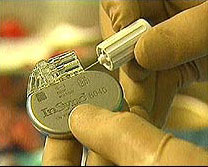
After wound closure, recovery is usually quick. Many patients can go home the same day or the following day.
What improves after the procedure?
The goal is to restore a stable heart rate and improve overall circulation.
After successful implantation, fainting episodes often stop completely. Energy level, activity, and exercise tolerance can improve dramatically.
A pacemaker does not treat every underlying heart disease, but it can very effectively correct the consequences of severe bradycardia.
Follow-up and rechecks
Regular follow-up is important after implantation. An early recheck after about one week is mainly for wound inspection and suture removal, and this can often be performed by the local veterinarian.
A further recheck is usually performed after several weeks to months. During these visits, heart rhythm, lead function, battery status, and programming are evaluated.
After that, pacemakers should usually be checked at least once a year. Programming changes can be made using an external programmer and normally do not require another surgical procedure.
How long does the battery last?
Battery longevity depends on the settings and how often pacing is required.
Typical battery life is several years, often around 7 years. When the battery nears depletion, the generator needs to be replaced.
Are there risks?
As with any procedure under general anesthesia and any interventional cardiac treatment, pacemaker implantation has potential risks. These include bleeding, infection, lead-related complications, lead displacement, or rhythm disturbances.
Overall, however, this is a well-established procedure that usually provides very good results when the indication is appropriate.
What does pacemaker implantation cost?
Cost depends on the individual patient, the system used, and the extent of diagnostic work-up required.
Pacemaker implantation generally costs around 2,500 euros or more, and depending on the clinic and the individual case it may be significantly higher.
This typically includes the cardiology work-up, ECG, echocardiography, radiographs, and the implantation procedure itself.
Further information and contact
Dogs and cats with suspected clinically relevant bradyarrhythmias should undergo a cardiology evaluation.
- Bradyarrhythmias and pacemaker indications
- Referral information
- Appointments and contact
- About the clinic
For appointments and questions, please contact the Small Animal Clinic of LMU Munich at +49 89 2180 2650 or by email at kleintier.kardiologie@lmu.de.